


Chapter 5: Planning Your Garage Site
Prepare Your Garage Site for a Seamless Installation
In the previous chapter, you learned about the essential building rules, regulations, and required setbacks from your local planning and zoning department. With that foundation in place, it’s time to create a detailed site plan for your new metal garage. Grab a tape measure and head outside to the location where you envision your garage.
WHY CHOSE US
Certified Metal Garages&Carport
Comes with a 1-year workmanship warranty and a 20-year warranty against rust, with optional 12-gauge steel framing and most roof panels.
Fast Delivery and Installation
Most of our metal garages&carports are delivered and installed within 30 to 60 days.
Risk-Free Guarantee
We offer a 100% refundable deposit until the day your metal garage&carport is delivered.

Contact Us for Your Custom Estimate
At Top Steel Shed, we offer fast, precise estimates for carports and garages. Contact us directly to budget your project easily.
What they’re saying
Step 1: Choose a Level Location
Ensure a Stable Foundation
A level spot is crucial for the foundation of your garage. Remember, “level” means the ground doesn’t slope, not necessarily that it’s perfectly flat.
Select a Naturally Level Area
Choose a location that is already fairly level to minimize the need for extensive grading.
Prepare for Installation Space
Besides the garage itself, you’ll need at least three feet of level ground around the building. For larger garages, especially commercial units that require forklift access, aim for six to eight feet of clearance on all sides.
Consider Local Building Codes
Many local regulations require the ground around your garage to slope away by about six inches over a ten-foot distance. This helps direct water away from the foundation, preventing damage. Check your notes from the planning department to confirm specific requirements.
Pro Tip:
Selecting a relatively level site from the start can save you money on excavation and grading costs, ensuring a smoother installation process.
Free Delivery and Installation
Our professional team will deliver and assemble your boat garage or carport at no additional cost.
Step 2: Inspect for Overhead Utilities and Trees
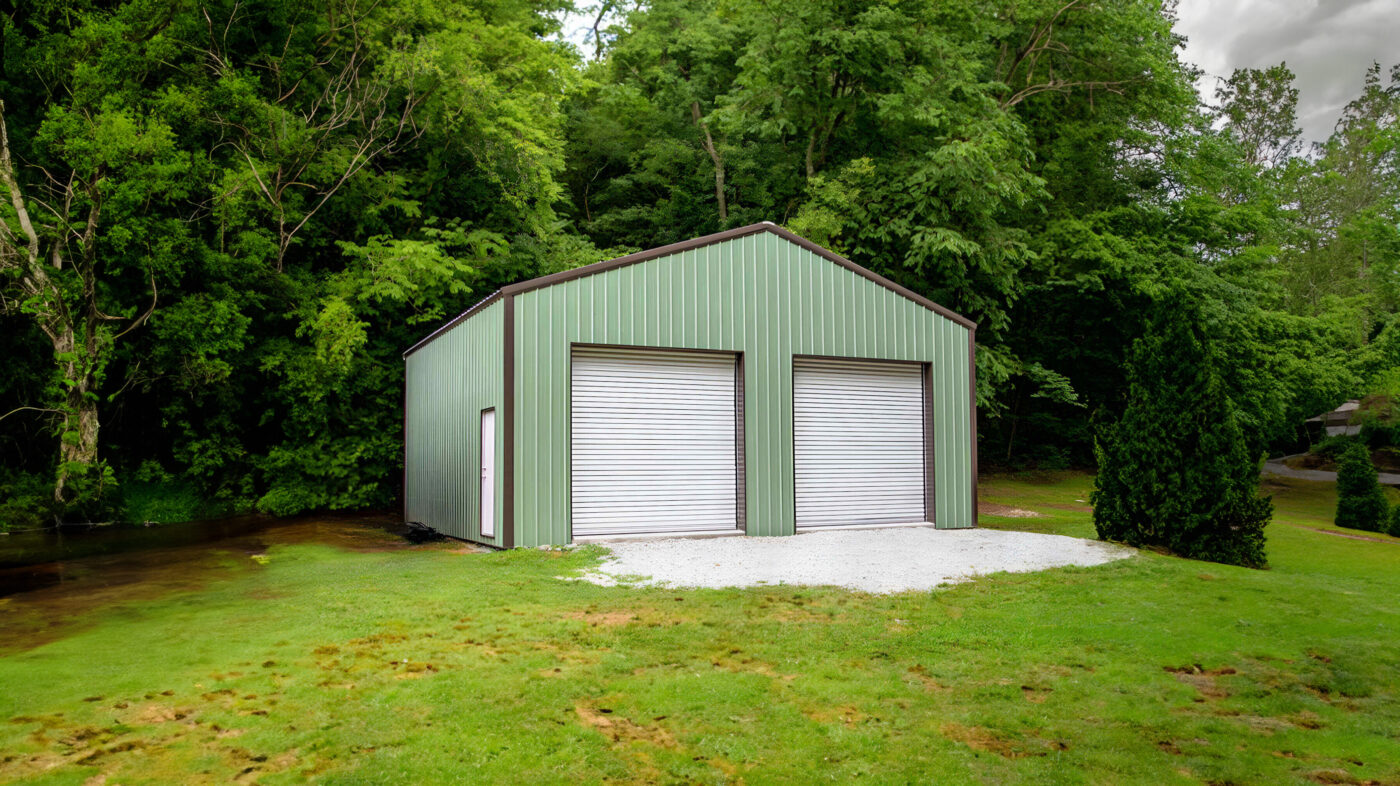
Avoid Hazards and Obstructions
Before finalizing your garage location, inspect the area for overhead utility lines and overhanging tree limbs.
Utility Lines
Ensure there are no overhead utility lines within 20 feet of your proposed garage site. Contact your utility provider if you’re unsure.
Height Considerations
The peak of a standard metal garage is typically three to four feet higher than the legs. Ensure there’s enough vertical space to accommodate this height without interference from trees or other structures.
Tree Maintenance
Trim any tree limbs that extend over the garage area to provide ample clearance for installation and future use.
Safety First
Keeping utility lines and tree limbs clear helps prevent accidents and ensures a safe installation environment.
Step 3: Mark Your Garage’s Corners and Verify Setbacks
Define Your Garage Boundaries
Accurately marking the corners of your garage site is essential to adhere to local setback requirements.
Stake Out the Area
Use stakes, sticks, or flags to mark the four corners of your garage.
Measure Setbacks
Ensure your garage is positioned correctly relative to property lines, existing structures, wells, septic fields, and roads. Setbacks are mandatory distances between your garage and these boundaries.
- Property Lines: Often, fences are not exactly on the property line. Leave an extra foot of space if necessary.
- Roads and Sidewalks: Verify the width of the public right-of-way to ensure your garage complies with local regulations.
Attention to Detail
Double-checking setbacks prevents legal issues and ensures your garage fits seamlessly within your property.
Get All the Details with Our Garage Buying Guide

Step 4: Inspect Underground Utilities
Prevent Subsurface Complications
Before any digging or grading, it’s vital to identify and locate underground utilities to avoid disruptions and hazards.
- Check for Easements: Ensure your garage site doesn’t overlap with any property easements, which might restrict building in certain areas.
- Utility Location: Contact 811 or visit call811.com to request a free mark of all underground utilities around your proposed garage site.
- Plan Accordingly: If utilities are present near your building site, you may need to relocate your garage or consult with a contractor for alternative solutions.
About our Garage Series


Frequently Asked Questions
The minimum width for a single-car garage is typically 10 feet, with garage door sizes usually scaled down to 8 feet. However, for larger vehicles like SUVs, a wider garage (12 feet) is recommended to ensure the doors can open comfortably.
The average single-car garage size is 12 feet wide by 20 feet deep. Other common sizes include 12’x25’ and 18’x20’, offering more space for storage and larger vehicles.
While our sheds and garages are not designed as permanent living spaces, they can be customized and insulated for use as workshops, studios, or recreational areas. Always check with local building codes and zoning regulations before planning to use the building as a living space.
A standard garage is typically 18 to 20 feet long, providing enough depth for most vehicles and additional storage space.
For full-size pickups, a garage should be at least 24 feet deep. This ensures ample space to maneuver around the vehicle and prevents any tight parking situations.
Standard garage door sizes for a two-car garage are approximately 9 feet wide per door, totaling around 16 feet wide for two doors. This accommodates most sedans and SUVs comfortably.
A typical 4-car garage measures at least 36 feet wide by 24 feet deep, with individual door widths of about 16 feet. Larger garages may be required for bigger vehicles or additional storage needs.
For comfortable access, a garage should be at least 4 feet wider and deeper than the vehicle’s dimensions. For example, a car that is 6 feet wide would require a garage that is at least 10 feet wide.