

Metal Building Insulation Types, Cost & Benefits
Ensure Comfort and Protection with Metal Building Insulation from Top Steel Shed
When the weather turns chilly and the winds howl, metal building insulation is essential to maintain comfort within any metal structure. Whether you’re preparing for winter or enhancing your existing metal building, understanding the necessity, types, and costs of insulation is crucial. This comprehensive guide will answer your questions about why insulation is important, the best types available, their costs, and the benefits they offer. By the end, you’ll be equipped to make an informed decision on the ideal insulation for your metal building.
WHY CHOSE US
Certified Metal Garages&Carport
Comes with a 1-year workmanship warranty and a 20-year warranty against rust, with optional 12-gauge steel framing and most roof panels.
Fast Delivery and Installation
Most of our metal garages&carports are delivered and installed within 30 to 60 days.
Risk-Free Guarantee
We offer a 100% refundable deposit until the day your metal garage&carport is delivered.

Contact Us for Your Custom Estimate
At Top Steel Shed, we offer fast, precise estimates for carports and garages. Contact us directly to budget your project easily.
What they’re saying
4 Key Benefits of Metal Building Insulation
Insulating your metal building brings numerous advantages, enhancing its functionality, protecting your belongings, and increasing your property’s resale value. Let’s explore the primary benefits of metal building insulation:

Creates a Moisture Barrier
Moisture control is the foremost purpose of metal building insulation. Metal structures facilitate heat transfer through a process called thermal bridging, which can lead to condensation due to temperature differences. Over time, this condensation can cause metal to oxidize and rust. Insulation slows down heat transfer, reducing the likelihood of harmful moisture buildup and prolonging the life of your metal building.
Regulates Inside Temperature
Insulation plays a critical role in maintaining a consistent temperature inside your metal building. It prevents heat from escaping during the winter and blocks excessive heat from entering during the summer. This temperature regulation ensures a comfortable environment year-round and can significantly reduce heating and cooling costs. For example, a heated garage will retain heat more efficiently with proper insulation, saving you money on energy bills.
Improves Resale Value
Beyond temperature control, insulation also dampens sound, making your metal building quieter and more pleasant to use. This is particularly beneficial for garages, workshops, or sheds where loud machinery or equipment is used. By absorbing sound, insulation creates a more comfortable and productive workspace.
Absorbs Loud Sounds
An insulated metal building enhances your property’s resale value. For instance, an insulated garage not only provides covered parking but also adds storage and usable square footage, making it more attractive to potential buyers. The added insulation increases the building’s functionality and comfort, making it a valuable investment that can pay off when you decide to sell.
3 Best Metal Building Insulation Types: Sizes and Costs
Choosing the right type of insulation for your metal building depends on your budget, climate, and specific needs. Insulation effectiveness is measured by its R-value, indicating its ability to resist heat flow—the higher the R-value, the better the insulation performance. Here are the top three insulation types for metal buildings, along with their typical costs and benefits:

Double Bubble
Description: Double bubble insulation features a reflective silver backing that faces the building’s sheeting, with a white side visible inside. It’s primarily used to control moisture and prevent condensation.
R-value: 1
Typical Cost: $1.50 per square foot
Benefits:
- Moisture Control: Prevents condensation and moisture buildup.
- Cost-Effective: The least expensive insulation option available.
Drawbacks:
- Limited Temperature Control: Offers minimal resistance to heat flow, making it unsuitable for climates requiring significant temperature regulation.
Woven
Description: Woven insulation combines aluminum foil, bubble material, and woven fabric to achieve an R-value of 17. It provides better temperature control compared to double bubble insulation.
R-value: 17
Typical Cost: $3.00 per square foot
Benefits:
- Enhanced Temperature Regulation: Offers superior insulation against heat transfer.
- Versatile: Suitable for various metal building applications, making it a popular choice.
Drawbacks:
- Moderate Cost: More expensive than double bubble insulation but offers better performance.
Spray Foam
Description: Spray foam insulation is highly customizable, allowing it to fit odd shapes and tight spaces with varying thicknesses. It comes in two types: open cell and closed cell.
R-value:
- Open Cell: 3.8 per inch
- Closed Cell: 7 per inch
Typical Cost: $2.30–$7.20 per square foot
Benefits:
- Customizable Application: Perfect for irregular spaces and specific insulation needs.
- High R-value: Especially closed cell foam offers excellent insulation performance.
- Moisture Resistance: Closed cell foam is water-resistant, ideal for dry climates.
Drawbacks:
- Cost: Closed cell spray foam is significantly more expensive than other options.
- Potential Moisture Trapping: In humid climates, spray foam can trap moisture, leading to corrosion if not properly installed.
- Oil Canning: Shrinkage during cooling and curing can cause metal panels to pull inward if not adequately supported.
How to Determine Insulation Needs
Accurately calculating your insulation needs is essential for effective temperature and moisture control. Here’s how to determine the right amount of insulation for your metal building:

Where to Insulate
To maximize the benefits of insulation, focus on the following areas of your metal building:
- Roof: Insulating the roof is crucial as it’s a major source of heat loss and moisture buildup.
- Walls: Proper wall insulation prevents thermal bridging and condensation.
- Floor and Foundation: While less critical than the roof and walls, insulating the floor and foundation can provide additional comfort and protection.
Tip: Ensure that windows and doors are also insulated and sealed to prevent air leaks and maintain the effectiveness of your overall insulation.
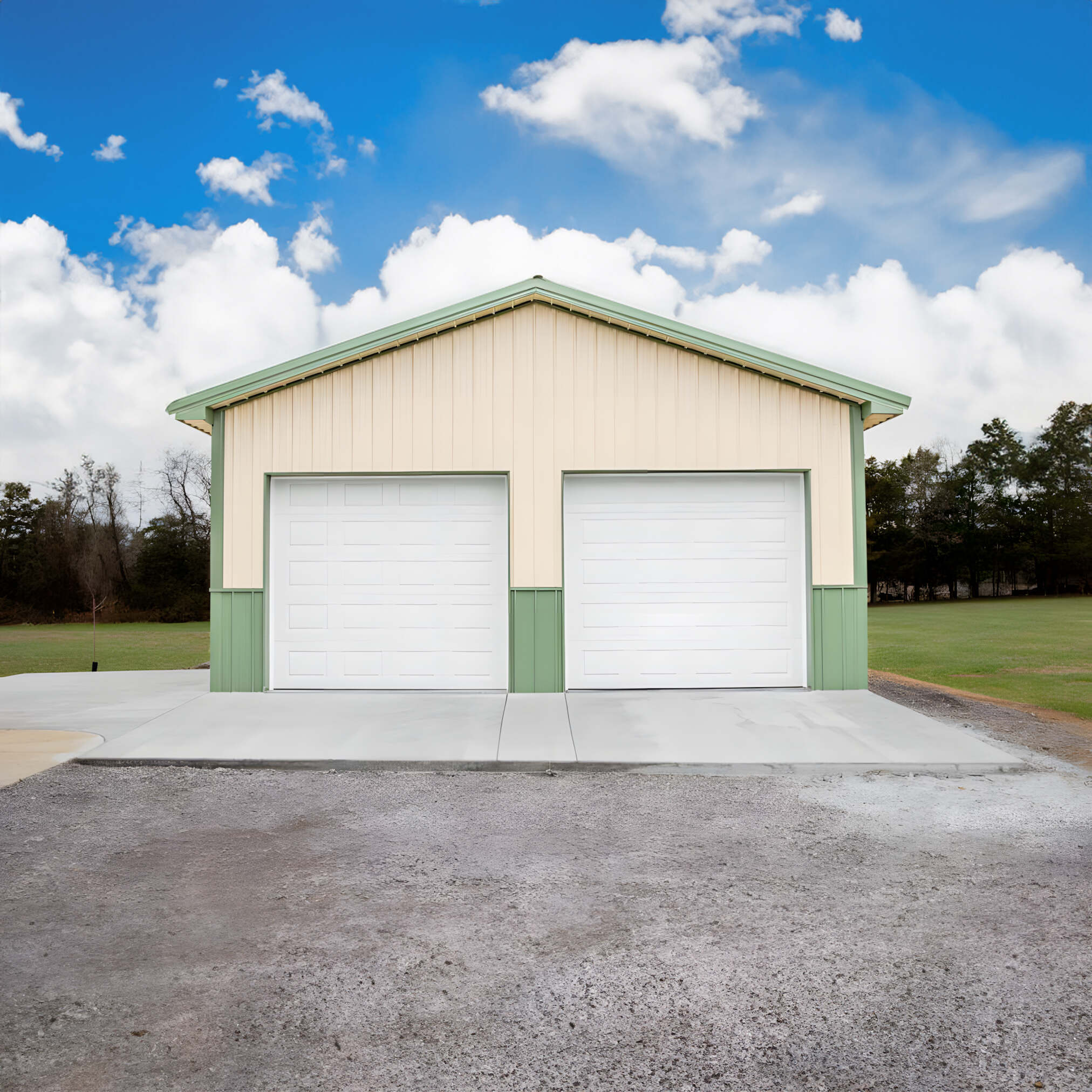
How to Calculate Insulation Costs
Calculating insulation costs involves measuring the roof and walls separately using the following formulas for buildings up to 30 feet wide:
- Roof: (Width + 2’) x Frame Length x Price Per Square Foot
- Sides: Height x Frame Length x 2 sides x Price Per Square Foot
- Ends: (Height + 2’) x Width x 2 ends x Price Per Square Foot
Note: For buildings wider than 30 feet, contact us for a customized pricing quote based on a more complex formula.
Get All the Details with Our Garage Buying Guide

Metal Building Insulation FAQ
Can you insulate a metal building after it’s built?
Yes, insulating a metal building post-construction is possible. Spray foam insulation is particularly effective for existing structures, although it’s not recommended for humid climates as it can trap moisture and cause corrosion.
Does cheap insulation work well on metal buildings?
While inexpensive insulation may provide basic moisture control, it typically lacks the thermal resistance and durability of higher-quality options. Investing in better insulation ensures greater temperature regulation and longer-lasting protection.
How do I choose the right insulation type for my metal building?
Consider factors such as your climate, budget, and specific building needs. Woven insulation is generally the best all-around choice for temperature control, while spray foam is ideal for custom applications in drier areas. Double bubble insulation is suitable for moisture control on a budget.
What is the R-value, and why is it important?
The R-value measures an insulation’s ability to resist heat flow. Higher R-values indicate better insulation performance, which translates to more effective temperature regulation and energy savings.
How can insulation improve the energy efficiency of my metal building?
Proper insulation reduces heat loss in the winter and heat gain in the summer, minimizing the need for heating and cooling. This leads to lower energy bills and a more comfortable indoor environment.
What is the lead time for garage or shed delivery?
Our typical delivery time ranges from 30 to 60 days, depending on the size and complexity of your order. We’ll keep you updated on the status and provide an estimated delivery date once your order is confirmed.
What payment methods do you accept?
We accept all major credit cards, checks, and online payments. Financing options are also available to make the purchase more manageable.
Can I install the garage or shed myself?
Yes, we offer DIY kits that come with detailed instructions and all necessary materials. If you prefer, we can handle the installation for you.
What should I do to prepare my site for installation?
A level, well-drained pad made of concrete, gravel, or compacted dirt is recommended to ensure the longevity and stability of your building. We can provide guidance on preparing your site before installation.
What is the process after placing an order?
After placing an order, we’ll confirm the details, schedule delivery and installation, and keep you updated on the progress. We’ll also work with you on any site preparation requirements.